

• Skip to main content
  • Skip to footer
CAEN logo light
  • About
    • Company Profile
    • Our policy
    • Sales network
    • Innovative Projects
    • Careers
    • How to reach us
  • Products
  • Resources
    • Documentation
    • FAQ
    • Glossary
    • Certifications
    • General Conditions
    • CAEN LHC Commitment
  • Support
  • Contact
Form FactorPower SupplyDigital SpectroscopyModular Pulse ProcessingEducationalFirmware & SoftwarePowered CratesAccessoriesWeeroc ProductsDigitizer FamiliessubfamilyWithoutFamilyFamiglia di provaProva Section1Categoria con name uguale a Section 2Sezione_di_testCategoria con label uguale a SectionCategoria con tutto ugualeTest section settembre

News

Results of FlexiSpec for WBC @ JRC Ispra

Home Senza categoria Page 5

Senza categoria

Results of FlexiSpec for WBC @ JRC Ispra

10/03/2020 by Nicole Filippi

In this news we present the official results of the background reduction obtained thanks to the CAEN FlexiSpec acquisition system installed at the Whole Body Counter (WBC) laboratory at the Joint Research Center (JRC) in Ispra.

The results of the upgraded WBC at JRC Ispra

The Whole Body Counter (WBC) at the Joint Research Centre (JRC) Ispra is an upgraded monitoring device available for European research in internal dosimetry.

A VETO anti-muonic system has been installed on the ceiling of the WBC and connected in anti-coincidence to four new detectors by interfacing with an Integrated Digital Acquisition System (IDAS) (CAEN FlexiSpec solution), permitting a reduction in the background level of more than 30%.

Moreover, using the new HpGe detector it’s possible to obtain MDA=24 Bq of 137Cs in a 20 min measurement, similar to Minimum Detectable Activity (MDA) using 203 mm (diam) x 102 mm NaI(Tl) (25 Bq), with better resolution.

The previous WBC and the upgrading

At first, only one NaI(Tl) detector composes the first version of the WBC.

Afterward, 3 HPGe detectors has been added to the system during some smaller upgrade.

However, two fully filled crates with analogical NIM electronics manages the four detectors.

The last update added a new NaI(Tl) detector read by 3 PMTs with a majority/add back logic and 11 plastic scintillators on the ceiling of the chamber to make anti-cosmic veto.

At the present time only one crate filled with VME multi-channel digital electronics composes the CAEN acquisition system and it manages:

  • 3 HPGe detectors
  • 3 PMTs to read-out 1 huge NaI(Tl) detector with majority and add-back logic
  • 11 plastic veto detectors in an anti-coincidence logic with the above listed detectors

All managed with a simple GUI on a PC.

But in addition to the ease of use, big goals regarding the spectroscopy results were targeted.

The addition of the 11 cosmic veto detectors was done to reduce the count rate of the spectroscopy detectors inside the lead chamber. The main goal was to enhance the Minimum Detectable Activity (MDA) with the same measurement time on a patient.

This challenge was really difficult because inside the lead chamber the count rate was only 3.5 Hz on a 124% efficiency HPGe detector.

CAEN FlexiSpec

CAEN acted as system integrator providing multichannel High Voltage, Low Voltage, preamp and MCA to perfectly manage heterogeneous detectors type (i.e. HPGe, NaI(Tl), plastic scintillators) coming from different providers.

All the system is now managed by a unique electronic with a single software that allows to:

  • set independent voltage for each detector,
  • power on or shut down each detector
  • make independent energy calibration for each detector
  • set parameters (i.e. gain, shaping time, …) for each channel
  • set single channel or board logic (i.e. coincidence, anti-coincidence…)
  • make digital add back between selected channels
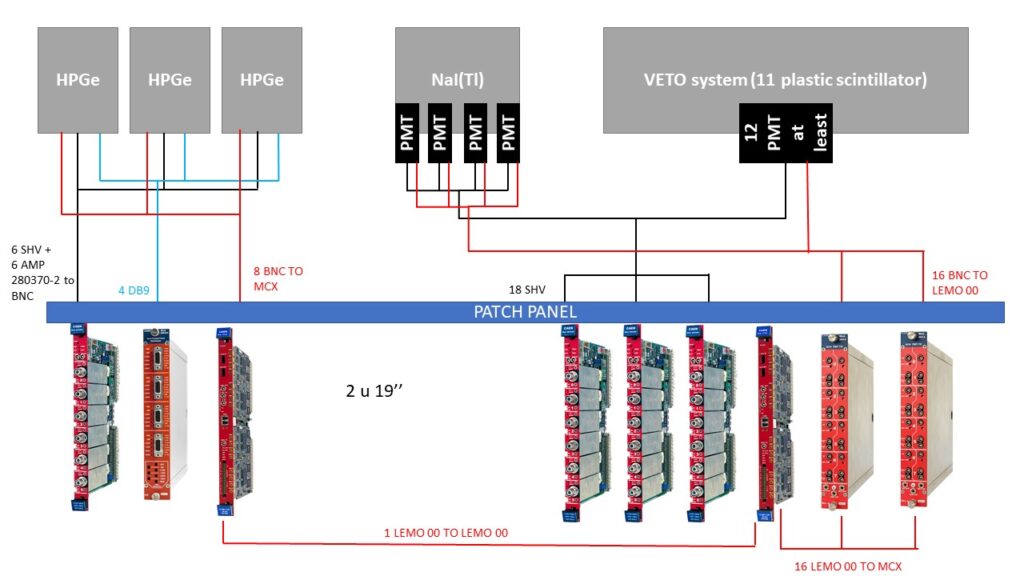
JRC Technical Report
Connection scheme FlexiSpec IDAS JRC Ispra

Filed Under: Senza categoria

INAIL mentioned MICADO as good practice of a digitization process

25/02/2020 by Nicole Filippi

The Istituto Nazionale per l’Assicurazione contro gli Infortuni sul Lavoro or INAIL (‘National Institute for Insurance against Accidents at Work’) is the Italian authority appointed to monitor and authorize the activities concerning ionizing radiation sources. Recently INAIL wants to update the procedures for handling industrial high activity sources. In particular, the aim of this update is:

  • enhance safety procedures for workers,
  • improve sources traceability,
  • reduce the residual risk of errors.

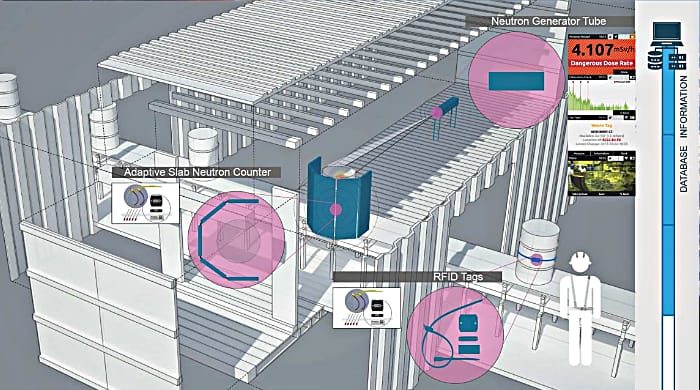
MICADO is cited as an example of automatized and digitized procedure to monitor in all steps of the process all the item under investigation. This dematerialization of information has many pros.

INAIL points out how, thanks to automatized procedures, it would be possible to follow almost in real time the radioactive source both in location and usage. Another advantage lies in the RFID tagging infrastructure adopted in MICADO

In fact, this technology enables the possibility to measure and read the tag online, thanks to the RadHand.

For more info (Italian only) https://www.inail.it/cs/internet/docs/all-proposta-gestione-sicurezza-sorg-radioattive.pdf?section=attivita.

About Micado Project
MICADO provides a complete digitization process that will facilitate and harmonize all the methods used in the field for waste management as well as for the dismantling and decommissioning (D&D) of nuclear plants.

Micado project INAIL secority procedures

Filed Under: Senza categoria

CAEN Educational is flying up Update 26/01/2020

21/01/2020 by Nicole Filippi

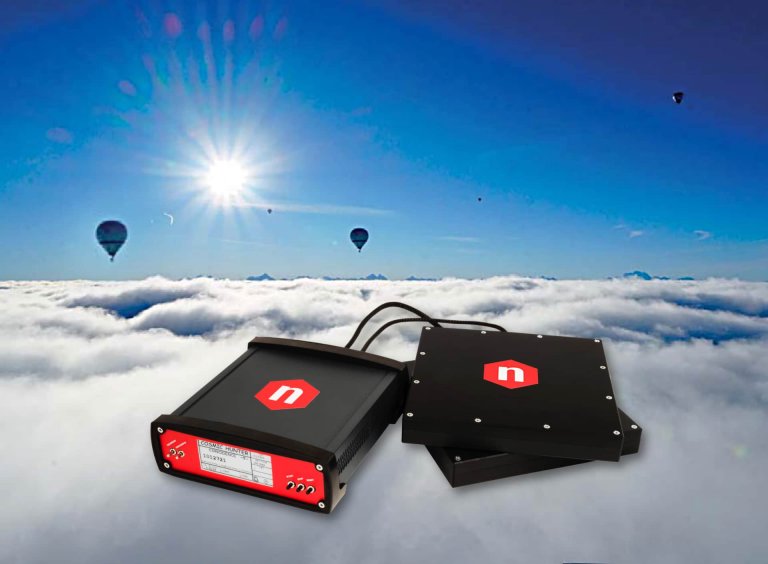
In Château-d’Oex on January 25th, Hans Peter Beck (University of Bern and Fribourg, and CERN) will repeat with some of his students the balloon flight of Albert Gockel from 1909 (with modern equipment using CAEN Cosmic Hunter), and measure cosmic rays.

Students from Uni Fribourg are estimating and then measuring the flux of cosmic muons 
through a telescope that will be set up with the Cosmic Hunter (adding spacers between tiles), in function
 of altitude under 90° and 45° up to 6000m.
Temperature will be stabilised in
 a thermobox, GPS data and air pressure
 will be constantly measured. Data will be analysed and compared with their estimations.

More information about Hot Air Balloons and cosmic rays can be found here

Brochure of the event

PDF

–

8 MB

Download
CAEN Educational is flying up Update 26/01/2020

42nd International Balloon Festival – 26th January, 2nd February

This edition will be placed under the sign of a birthday: 20 years ago, Bertrand Piccard and Brian Jones took off from Château-d’Oex to make this fabulous trip, the round-the-world trip in a non-stop balloon, taking with them the name of Château-d’Oex beyond the European continent.
The fame of this event has been built from year to year thanks to many pilots, crews, volunteers, partners, all driven by the passion for the ball by making available, without reserve, their time, their high skills so that, each year, radiates this exceptional flight site. We would like to warmly thank all those involved from the start and up to this day in this unique aerostatic adventure.
The organizing committee has the important task of perpetuating and consolidate the International Balloon Festival through the development of an aerostatic competence center that lives up to its strong values ​​of passion, know-how and authenticity. This, with the vision of developing and transmitting the magic of balloon flight to a new generation of pilots and a large audience, in an exceptional alpine flight site.

Update 26/01/2020

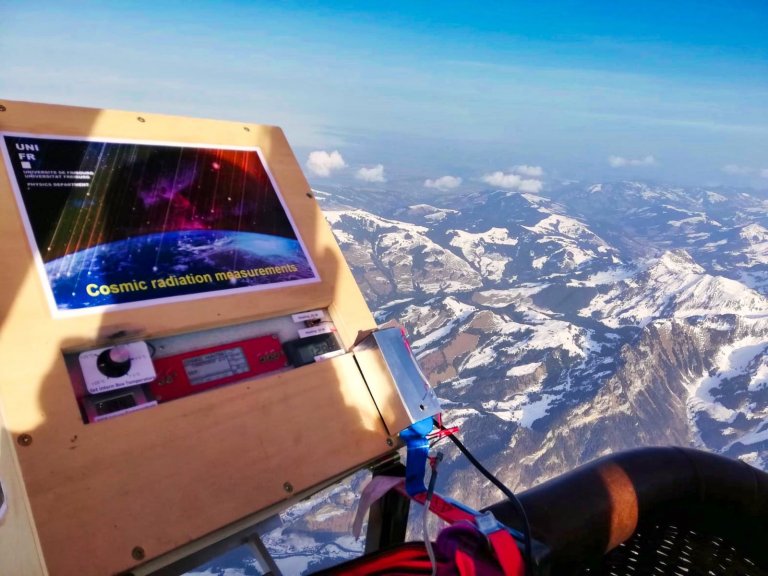
Hans Peter Beck, full professor @ University of Bern · Albert Einstein Center for Fundamental Physics, told us how the event was and his flight on the baloon with their student (taking some wonderful pictures)

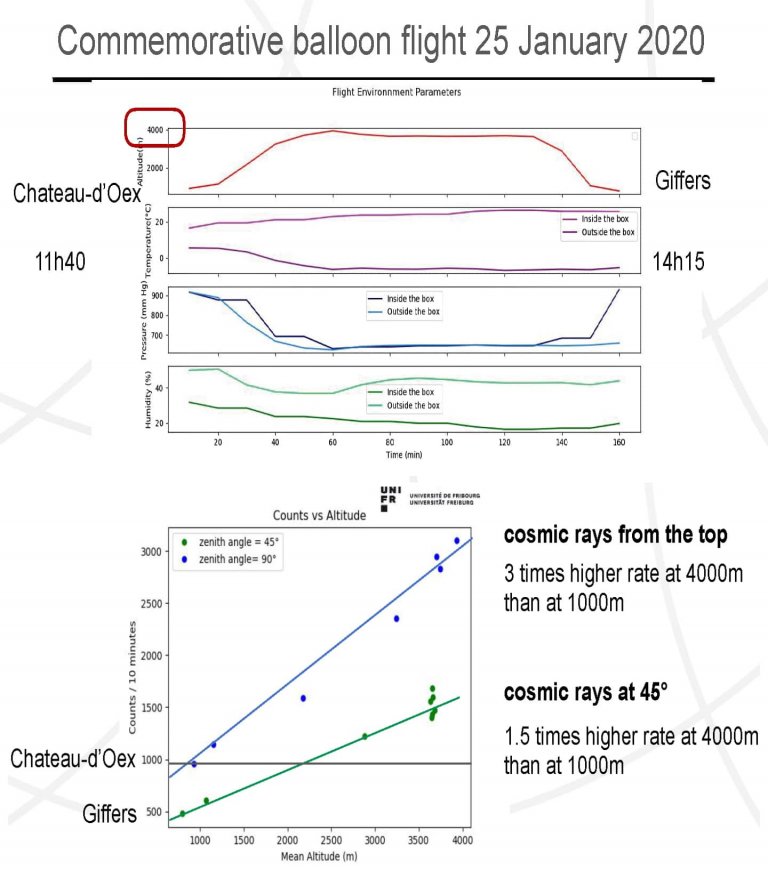
“The Cosmic Hunter worked very well. We put it into a box and maintained temperature stable at 20°C.
We measured altitude, pressure, temperature and humidity (in- and outside the box) about every 2 seconds.”

Cosmic radiation mongolfiera
Chateau doex CAEN cosmic ray 5

We then merged these measures with the data acquired from the Cosmic hunter creating a new measurement data-base that contained the Cosmic Hunter data, associated with the average altitude, average temperature, etc.

“It was a great experience, and I really enjoyed flying in a balloon at 4000m altitude. We may have the chance for a flight up to 6000m later this week – depending on weather conditions improving.”

CAEN would like to thank Hans Peter for his willingness and passion giving us the chance to partecipate at this event!
“La Liberté” Swiss newspaper talk about this physics experience in this article

Presentation by Hans Peter Beck to the commemorative balloon flight of Gockel: Pioneers of Cosmic Rays

Pioneers of cosmic rays

PDF

–

1 MB

Download

Read full article on CERN COURIER March/April 2020 pp.11

CERN Courier – digital edition

PDF

–

6 MB

Download

Filed Under: Senza categoria

CAEN is member of HiPEAC Project

16/01/2020 by Nicole Filippi

CAEN is proud to be a member of HiPEAC Network which provided a hub for European researchers and industry representatives in computing systems.

About HiPEAC
HiPEAC (High Performance and Embedded Architecture and Compilation) is the premier focal point for networking, dissemination, training, and collaboration activities in Europe for researchers, industry, and policy related to computing systems. Today, its network, the biggest of its kind in Europe, numbers over 2,000 specialists.
HiPEAC’s mission is to advance computer architecture and computing systems research and development as a discipline in Europe.

Check the HiPEAC Info magazine for the latest news – quarterly publication (we are on page 22 of this issue)

More information about HiPEAC Network Project can be found here

Filed Under: Senza categoria

CAEN has joined to Eduroam Network as Resource Provider

11/11/2019 by Nicole Filippi

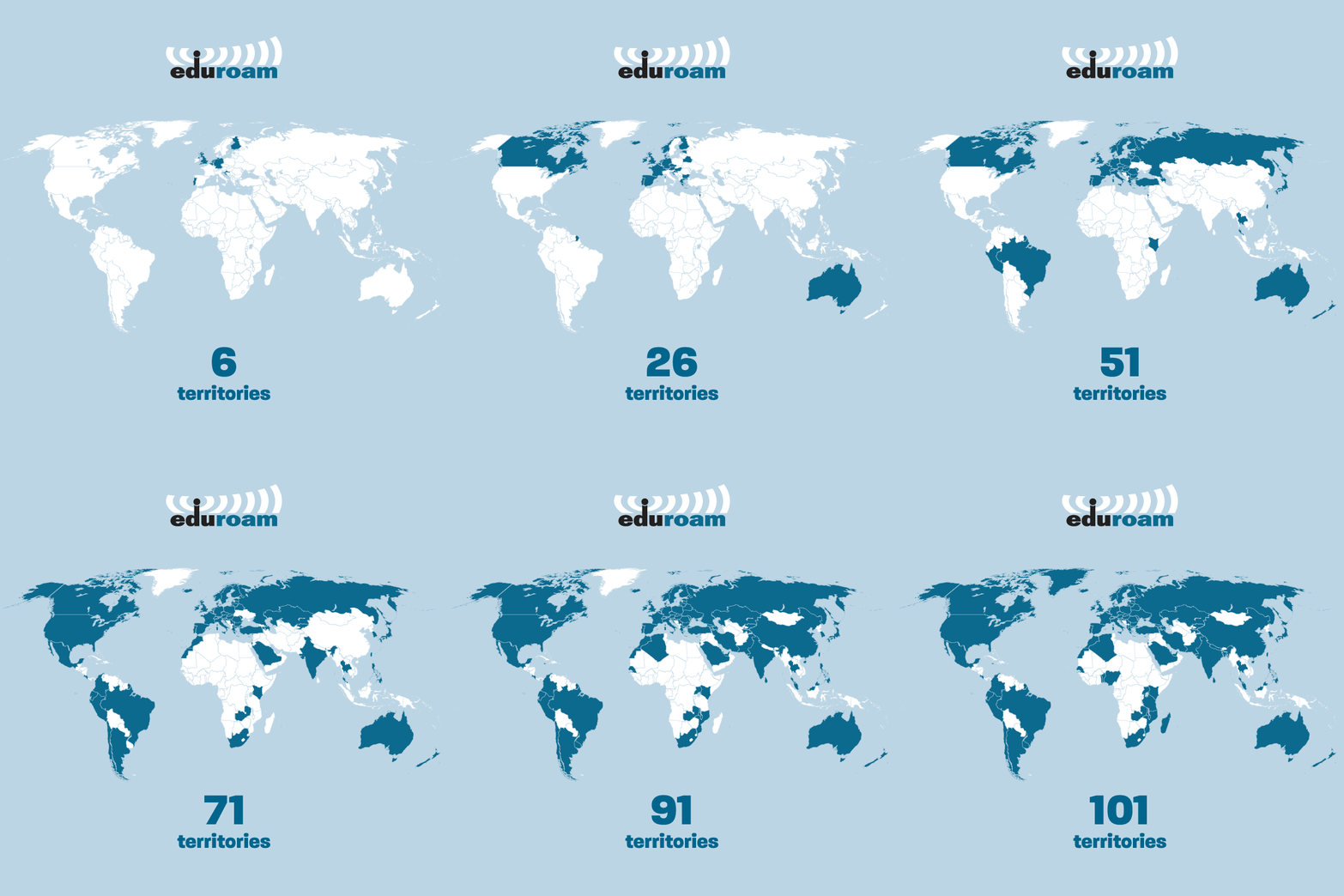
CAEN has joined, as a Resource Provider, the EDUROAM Federation (EDUcation ROAMing) with its wireless network, which aims to offer all users of participating organizations easy and secure wireless access to the Internet.

On the one hand this service facilitates the free mobility of students, teachers and researchers, on the other it marks an important step in the process of progressive opening of the University network at international level. A secure access – based on the username and password strictly controlled by the institution of belonging – is combined with the freedom of access to the wireless network of all the federated institutions, across more than 100 countries.

More information about EDUROAM Federation can be found here

Eduroam Network across countries, 2019 | eduroam.org/about

Filed Under: Senza categoria

NA62 spots two potential instances of rare particle decay

26/09/2019 by Nicole Filippi

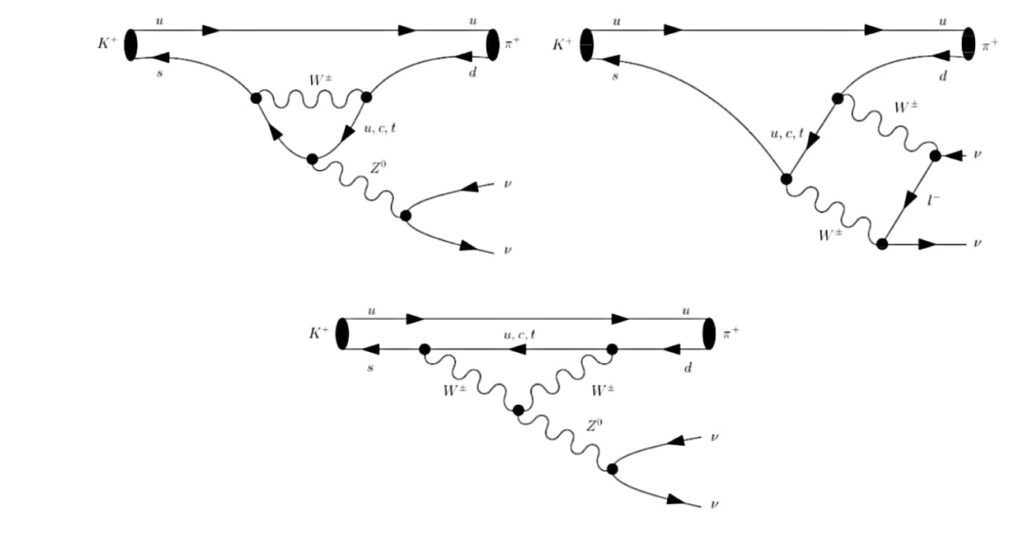
On September 23rd 2019, the NA62 experiment at CERN announced the measurement of other two K+ → π+ ν ν decays after the first one announced back in 2018 (NA62 sees hints of rare kaon decay).

These measurements are useful to shine light on dark matter, as hints of new physics beyond standard model can hide in rare decays as the charged kaon (K+) been investigated by NA62. The Standard Model predicts a very small fraction of K+ to decay into a positively charged pion and a neutrino-antineutrino pair, therefore finding deviation on this well predicted branching ratio can point to new particles and perhaps discover more about the nature of dark matter.

So far NA62 has measured three of these decays in the dataset collected in 2016 and 2017, even if they seem few the physicists were already able to measure the K+ → π+ ν ν branching ration with unprecedented precision and put more stringent limit on new physics.

NA62 logo

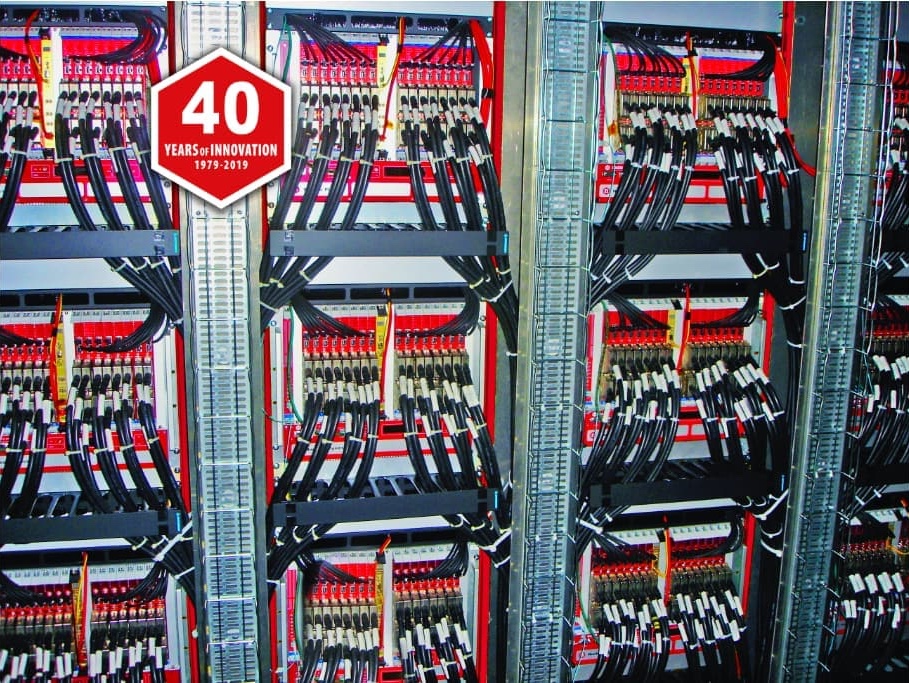
CAEN has contributed to NA62 in many different ways from the very first phases with dedicated R&D and various other products, including power supplies (PMT PS system for NA62) and data acquisition system for the Liquid Krypton Calorimeter (CREAM).

NA62 spots two potential instances of rare particle decay gallery media
Figure 1.1 – Calorimeter REAdout Modules (CREAM) for the NA62 high resolution Liquid Krypton Calorimeter (LKr);
NA62 spots two potential instances of rare particle decay gallery media
Figure 1.2 – The penguin and box diagrams contributing to K+ → π+νν. For KL → π0νν the spectator quark is changed from u to d.;

Filed Under: Senza categoria

  • « Go to Previous Page
  • Page 1
  • Interim pages omitted …
  • Page 3
  • Page 4
  • Page 5
  • Page 6
  • Page 7
  • Page 8
  • Go to Next Page »

Footer

CAEN S.p.A.

PI 00864500467 | REA: LU 102690

C.I.V.: 500.000€ | CDU A47Ø7H7

Caen Group Logo
Certificate ISO 9001:2015
Secured by Sectigo

About Us

  • Company Profile
  • Our policy
  • Sales network
  • Innovative Projects
  • Careers
  • How to reach us

Products

Applications

  • High Energy Physics
  • Astrophysics
  • Neutrino Physics
  • Dark Matter Investigation
  • Nuclear Physics
  • Material Science
  • Medical Applications
  • Homeland Security

Resources

  • Resources

Support

  • Getting Started with MyCAEN Portal

News

  • News

Contact Us

  • Contact

Login

    
  • Privacy Policy
  • Cookie Policy

Copyright © 2024 CAEN S.p.A. All rights reserved. Website by Addiction

✕