

12 Channel Floating 500 V, 1 mA /10 mA Board
A1511B
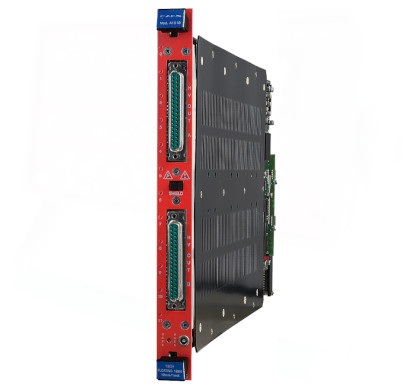
The Mod. A1511B single width board houses 12 HV floating channels. The output voltage can be programmed and monitored in the range 0÷500 V with 100 mV resolution. The floating channels allow on detector grounding, thus avoiding ground-loops which may increase noise level. The Mod. A1511 offers 1 mA / 10 mA dual current range (selectable via internal jumpers).
If the output voltage differs from the programmed value by more than 3% of voltage full scale range, the channel is signalled to be either in OVERVOLTAGE or UNDERVOLTAGE condition. Moreover, for each channel, a voltage protection limit SVMAX can be fixed via software with 1 V resolution and the output voltage can not be programmed beyond this value.
The HV RAMP-UP and RAMP-DOWN rates may be selected independently for each channel in the range 1÷50 V/s in 1 V/s steps.
The output current is monitored with 100 nA / 1 µA resolution depending on current range; if a channel tries to draw a current larger than its programmed limit it is signalled to be in OVERCURRENT condition; the SY1527 system detects this state as a fault and reacts according to the setting of the TRIP parameter, namely:
1) TRIP = infinite ( = 1000 s)
When the set output current value is reached the channel behaves like a constant current generator.
2) TRIP = finite (< 1000 s)
The output current keeps the set value only for programmed time interval and then is switched off.
The TRIP time (i.e. the maximum time an OVERCURRENT condition is allowed to last) can be programmed in 0.1 s steps.
The maximum output voltage (VMAX Hardware) can be fixed, through a potentiometer located on the front panel, at the same common value for all the board channels and this value can be read out via software.
The board is provided with an “HV EN” input that disables the channels when it is not connected to ground.
Features
- 12 independently controllable High Voltage channels
- 500 V output; 10/1 mA dual current range
- Individual floating channels
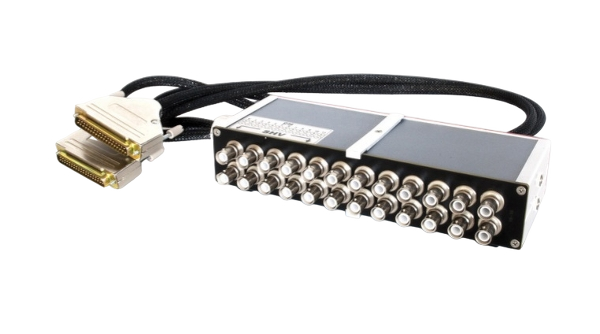
- DB37 Multipin connectors
- Low ripple
- Under/over-voltage alert, overcurrent and max. voltage protection
- Interlock logic for unit enable
- Software Tool for easy channel management
A1511B: Manuals

Request a Quote

Footer