

• Skip to main content
  • Skip to footer
CAEN logo light
  • About
    • Company Profile
    • Our policy
    • Sales network
    • Innovative Projects
    • Careers
    • How to reach us
  • Products
  • Resources
    • Documentation
    • FAQ
    • Glossary
    • Certifications
    • General Conditions
    • CAEN LHC Commitment
  • Support
  • Contact
Form FactorPower SupplyDigital SpectroscopyModular Pulse ProcessingEducationalFirmware & SoftwarePowered CratesAccessoriesWeeroc ProductsDigitizer FamiliessubfamilyWithoutFamilyFamiglia di provaProva Section1Categoria con name uguale a Section 2Sezione_di_testCategoria con label uguale a SectionCategoria con tutto ugualeTest section settembre

News

CAEN at IOP HEPP & APP Annual Conference 2022

Home Senza categoria Page 3

Senza categoria

CAEN at IOP HEPP & APP Annual Conference 2022

10/05/2022 by Nicole Filippi

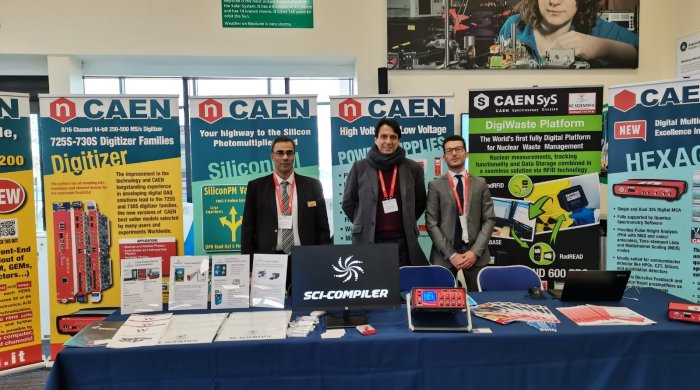
CAEN was glad to attend the HEPP & APP Annual Conference 2022 that took place at Rutherford Appleton Laboratory at the beginning of April. CAEN participated with a stand and presenting a poster about the scalable Front-End Readout System developed by CAEN: the FERS-5200. The annual conference has been organized by the Institute of Physics and The UK High Energy Particle Physics and Astroparticle Physics, marking the 65th anniversary of this IOP conference with a poster session that took place to showcase works and innovations from major national and international researchers. The meeting was an important occasion to bring together people, show the latest updates and discuss with senior members of the Science and Technology Facilities Council.

For further details of the event, please visit: https://www.iop.org/events/iop-hepp-app-annual-conference-2022
FERS-5200 poster

PDF

–

956 KB

Download
CAEN at IOP HEPP & APP Annual Conference 2022

Filed Under: Senza categoria

WMG REACh™ Detector System: a new radwaste characterization system

28/01/2022 by Nicole Filippi

A game-changing technology is now available for the nuclear industry!

CAEN is very proud to announce that WMG Inc, its technology partner in the USA, with over 40 years of experience in nuclear waste management and characterization, has announced the integration of the DigiWASTE platform to perform characterization and classification measurements on LLRW radwaste packages thanks in part to the digitization of data directly in the field.

The REACh™ Detector System is a WMG Inc. solution which represents a step change in how low-level nuclear waste is characterized and classified. The system integrates the RadHAND and DigiWASTE platform, developed by CAEN SyS Spectroscopy division, which identifies the predominant gamma emitting radionuclides in waste packages, as well as perform tasks without the need for a Subject Matter Expert to review spectra. The REACh™ Detector System is divided into two-parts (hardware and software): the RadHAND, named the REACh™ Detector, uses a 2” x 2” NaI(Tl) crystal inside its detector housing, and a web interface which provides users a unique platform to handle all their REACh™ Detector measurements. The REACh™ Software has been developed to import the automated radionuclide information from the detector to allow users to easily characterize and classify radwaste packages, as well as perform baseline and outgoing surveys on items and equipment for free release determination.

The REACh™ Detector System has been successfully evaluated in several in field measurement campaigns. The successful completion of the field testing is broken down into radionuclide identification, spectra acquisition comparisons, and final characterization results. The results between the REACh™ Detector System and an HPGe based system supply comparisons for each package type that was analysed. For example, the final characterization for the 55-gallon drums is supplied for the aggregate of all the 55-gallon drums which were measured. The REACh™ results were compared to the HPGe acquired gamma spectra showing that the total gamma activity was within 10 %. The REACh™ characterization results were over 20% lower on the average than the waste generator results!

Next month, the 7th of February, CAEN will take part at the 5th edition of NCT Middle East 2022, taking place at the Radisson Blu Hotel & Resort Abu Dhabi Corniche, UAE.

Filed Under: Senza categoria

CAEN-EIE awarded contract to provide 11 ASTRI Mini-Array Cherenkov cameras

06/09/2021 by Nicole Filippi

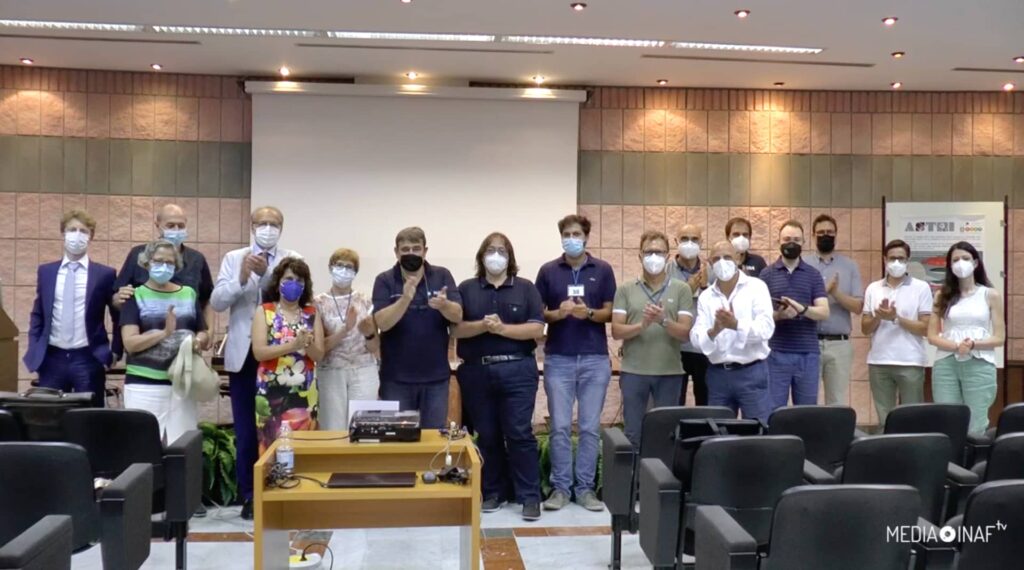
The kick off meeting among INAF (Istituto Nazionale di AstroFisica) and the CAEN-EIE Consortium, involving CAEN SpA, EIE GROUP srl and other qualified companies, took place in Palermo on 13 July 2021 for the supply of 9+2 Cherenkov cameras to be installed on the 9 ASTRI Mini-Array telescopes in Tenerife (Canary Islands, Spain). The two additional cameras will be used for test and replacement purposes.

For more information about the ASTRI Mini-Array, visit the reference page http://www.astri.inaf.it. A dedicated video, realized and published by Media INAF on the 16th July, 2121, is now available on YouTube: https://www.youtube.com/watch?v=ih-dT0b5FO4.

Kick off Meeting – Credits: Media INAF
Figure 1 – Kick off Meeting – Credits: Media INAF
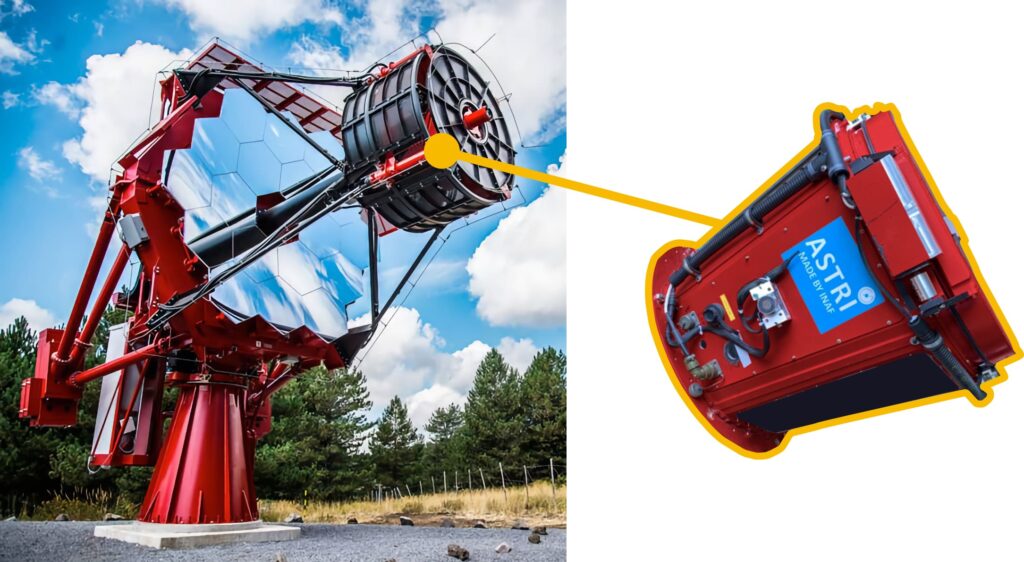
ASTRI Telescope located @ Serra la Nave, Catania, Italy
Figure 2 – ASTRI Telescope located @ Serra la Nave, Catania, Italy – Credits: ASTRI/INAF/EIE

The Cherenkov camera is the heart of the telescope and thanks to the dual-mirror design ASTRI telescopes has a very small footprint (just 60 cm in diameter) and is based on innovative electronics and electro- mechanical systems.
The architecture of the Cherenkov cameras will be realized on the basis of the prototype camera built by INAF, which mounted on the ASTRI-Horn Prototype successfully detected Cherenkov signals[1] [2].

Each camera, whose detection plane is curved for technical requirements, will mount 37 SiPM matrix of 8×8 pixels each with a side of about 7 mm. A total of eleven cameras will be built for the Astri / Mini-array project, one of which for engineering and qualification activities and one for reserve. SiPM sensors represent the latest generation of light detection systems. The high efficiency of photo-detection and a large collection area make them very efficient for the detection of gamma photons emitted by celestial sources.

About ASTRI

ASTRI was born as a MIUR flagship project aimed at developing the next generation of IACT telescopes (Atmospheric Cherenkov Telescope Imaging) for astronomy in gamma rays from the ground. The ASTRI-Horn prototype installed on the slope of the Etna volcano on the astronomical site operated by INAF Catania represents the first telescope for Cherenkov astronomy that has adopted the optical configuration of the dual- mirror Schwarzschild-Couder type. Now the ASTRI collaboration is implementing an array of 9 telescopes, similar to ASTRI-Horn, at the astronomical site of the Observatorio del Teide, Tenerife, Canary Islands to observe with high sensitivity and unprecedented angular resolution the gamma-ray Universe in the 1-100 TeV spectral band. The ASTRI Collaboration, led by INAF, includes various Italian Universities and INFN. The Instituto de Astrofísica de Canarias (IAC), Fundación Galileo Galilei (FGG), the University of São Paulo/FAPESP in Brazil and the North West University of South Africa are strategc partners of the collaboration.

Filed Under: Senza categoria

CAEN solutions for Neutron Detection

27/05/2021 by Nicole Filippi

In the last newsletter (you can subscribe here) we talked about CAEN solutions for Neutron Detection. Neutron Coincidence Counting is one of the fundamental techniques for non-destructive assay. CAEN offers complete solutions to satisfy the needs of attended and unattended measurements.

Unattended Data Acquisition Module for Unattended Monitoring Systems (UMS)

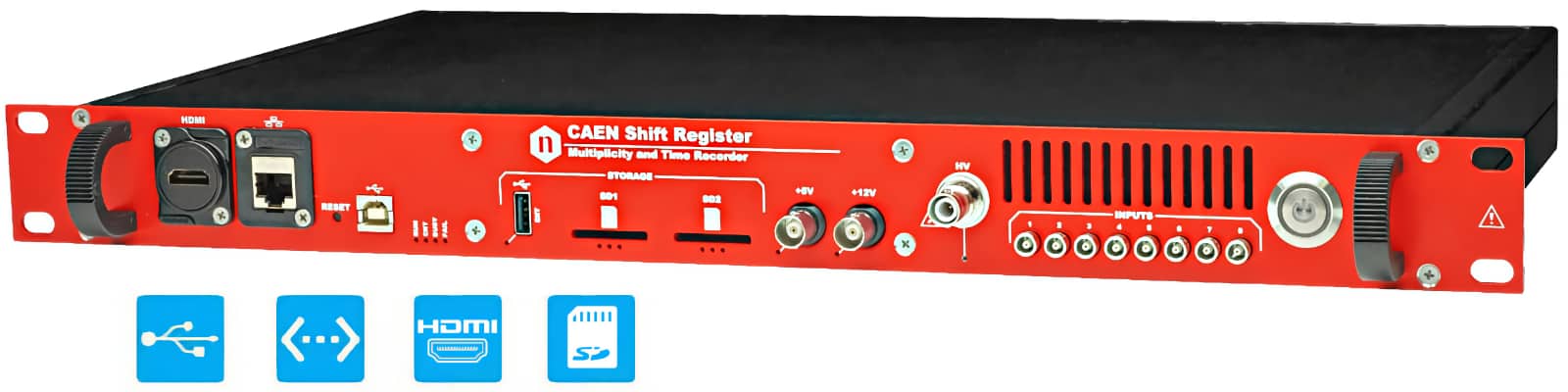
The R7780 is a complete readout, acquisition and analysis module for up to 8 neutron detectors that can work in unattended mode. It combines the functions of a Shift Register and a Pulse Train Recorder. The eight single-ended TTL inputs (LEMO) feature independent counting capability and adjustable input thresholds, giving the possibility to compensate TTL signal voltage drops in case of long- distance use.
The internal 100MHz sampling clock fits for high count-rate applications and the on-board FPGA with ARM CPU running Linux makes it possible to provide time-stamped lists and the overall neutron counting information (coincidence timing, multiplicity distributions of coincident events, etc.) required for the analysis in Nuclear Safeguards and nuclear material process monitoring.

More info
R7780 image
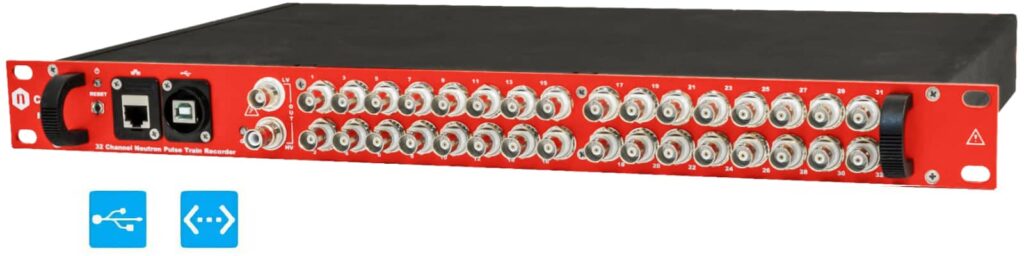
R7771 image

Neutron Pulse Train Recorder

The R7771 is a Neutron Pulse Train Recorder for the acquisition of signals from 32 neutron detectors. It provides the time-stamped list of TTL pulses from neutron detector front-end electronics with 10ns pulse pairs resolution independently per each channel.
The R7771 provides the most complete information on neutron counting, giving the capability to characterize nuclear material in passive mode and to analyse the transients in active nuclear material interrogation. The 32 independent inputs allow for the acquisition from big volume assay systems composed by multiple neutron detectors.

More info

Neutron Position Measurement System

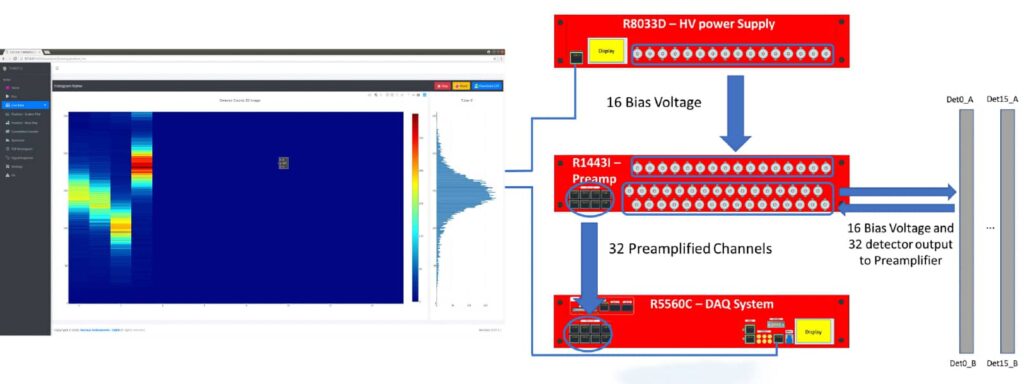
R8033 High Voltage board, R1443 Charge Sensitive Preamplifier specifically designed for 3He/BF3 tubes and R5560 14-bit 125MS/s open FPGA Digitizer can be combined together to build a complete readout system for neutron detection applications. Thanks to its features, the system can acquire waveforms, energy, ToF spectra and perform position reconstruction.
Thanos software allows to easily manage all the setup and the acquisition parameters via the web-based GUI, saving the data and statistics locally or on the client PC.

Require Measurement Report
R5560 image
R1443 technology is granted to CAEN by Institut Laue-Langevin – Grenoble, France (ILL). R5560 and DAQ is developed in collaboration with Nuclear Instruments.

Filed Under: Senza categoria

Portable XRF spectrometers for multiple applications in Cultural Heritage

06/04/2021 by Nicole Filippi

The culture of innovation has always been a crucial aspect for CAEN. Today companies and public authority operate by the need for synergetic solutions to promote and improve technological transformation through diagnostic and preservation.

In a context where advanced technologies reside in the development of innovative solutions in many sectors, ENEA Tech and INFN will commit themselves to this goal by signing an agreement to promote and enhance technology transfer.

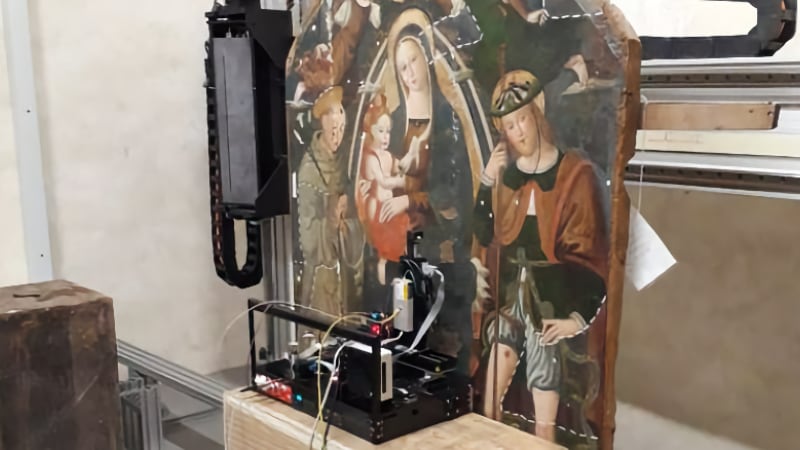
Adorazione magi CAEN
Pictures under courtesy of INFN-CHNet (Cultural Heritage Network)
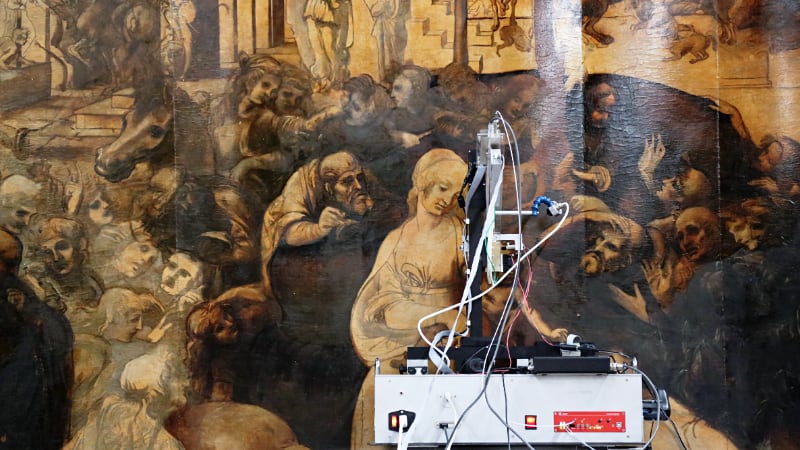
Adorazione magi di Leonardo CAEN
Pictures under courtesy of INFN-CHNet (Cultural Heritage Network)

A recent example of an ad-hoc tool for cultural heritage designed by CHnet – the INFN network for Cultural Heritage – is the XRF scanner used for MA-XRF analysis in some medieval and modern art masterpieces such as “La Venaria Reale” and the unfinished work by Leonardo da Vinci, “The Adoration of the Magi” which have been the subject of diagnostic investigations by the CHNet laboratories through X-ray fluorescence measurements for images performed with the scanner developed in Florence and aimed at characterizing the drawing materials.

The XRF scanner embeds a CAEN digital multi channel analyzer (DT5780SD MCA) designed specifically for diamond and silicon detectors coupled with a CSP, in combination with other hyperspectral analysis methods.

Filed Under: Senza categoria

Gamma Spectrometer for agriculture missions and environmental monitoring

01/03/2021 by Nicole Filippi

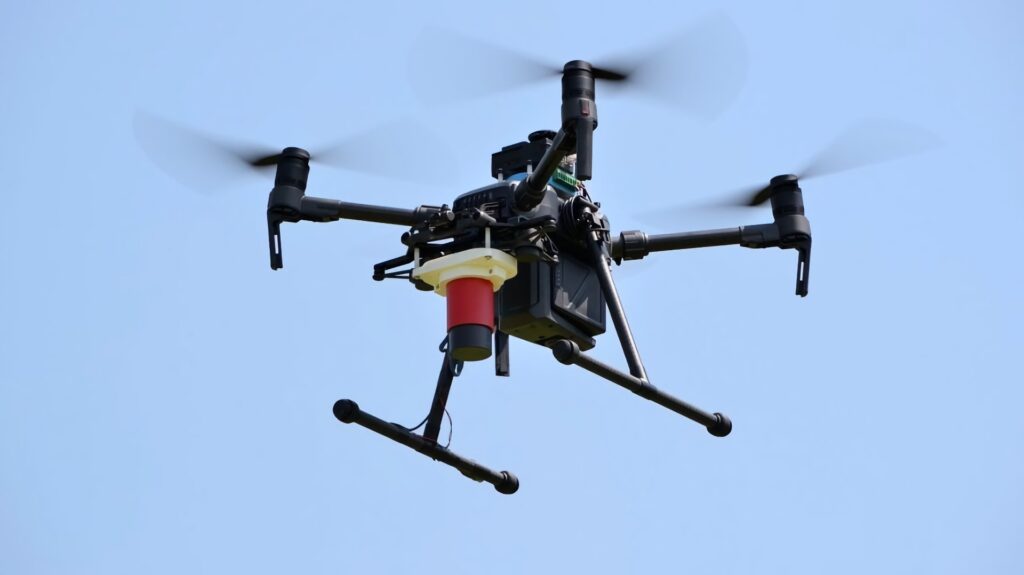
The CAEN i-Spector gamma spectrometer has been used within the project Pignoletto mounted on a drone (image below), in search of natural radiation from the soil and the environment to help next-generation agriculture missions.

Pignoletto aims to create a multiscale analysis system of the characteristics of the soils and the environment, based on the combination of geophysical field measurements obtained from sensors carried by an unmanned drone: ionizing (gamma) radiation, hyperspectral imaging (HSI) and thermal multispectral imaging. Moreover satellite (PRISMA and Copernicus) and proximity informations are acquired.

The Pignoletto project is coordinated by the National Institute of Nuclear Physics (INFN) of Milan and the partners are Nuclear Instruments s.r.l., INAF, ELSE Nuclear s.r.l., FEM2 Ambiente s.r.l., Aermatica3D s.r.l., Blu Electronic s.r.l. and Red Cat Devices s.r.l.
The project is financed by the Lombardy region with European structural funds relating to the call “Greening the economy in line with the Sustainable Development Goals (SDGs)” within the Workprogramme n.12, “Climate action, environment, resource efficiency and raw materials”.

The unmanned drone of the Pignoletto project mapping a soil

Filed Under: Senza categoria

  • « Go to Previous Page
  • Page 1
  • Page 2
  • Page 3
  • Page 4
  • Page 5
  • Interim pages omitted …
  • Page 8
  • Go to Next Page »

Footer

CAEN S.p.A.

PI 00864500467 | REA: LU 102690

C.I.V.: 500.000€ | CDU A47Ø7H7

Caen Group Logo
Certificate ISO 9001:2015
Secured by Sectigo

About Us

  • Company Profile
  • Our policy
  • Sales network
  • Innovative Projects
  • Careers
  • How to reach us

Products

Applications

  • High Energy Physics
  • Astrophysics
  • Neutrino Physics
  • Dark Matter Investigation
  • Nuclear Physics
  • Material Science
  • Medical Applications
  • Homeland Security

Resources

  • Resources

Support

  • Getting Started with MyCAEN Portal

News

  • News

Contact Us

  • Contact

Login

    
  • Privacy Policy
  • Cookie Policy

Copyright © 2024 CAEN S.p.A. All rights reserved. Website by Addiction

✕