


Material Science
Material Science is a multidisciplinary field that explores the properties, structure, and performance of materials to understand and manipulate their behavior for practical applications.
By studying the relationships between a material’s atomic structure, microstructure, and macroscopic properties, scientists aim to design and engineer new materials with tailored characteristics.
Experiments often involve advanced techniques such as X-ray diffraction, electron microscopy, spectroscopy, and computational modeling to analyze materials at various scales, from the atomic level to bulk behavior.
Research in material science drives innovation across industries, including electronics, energy, transportation, medicine, and construction.
By uncovering the principles that govern material behavior, this field enables the development of stronger, lighter, more durable, and more efficient materials, shaping the technologies of the future and addressing global challenges such as sustainability and energy efficiency.

Examples of our products used:
CAEN products play a crucial role in material science, offering cutting-edge instrumentation for the analysis and characterization of materials at the atomic and microscopic levels.
From synchrotron facilities to electron microscopy labs, CAEN’s high-performance power supplies, data acquisition systems, and signal processing solutions enable precise and reliable measurements in demanding experimental setups.
With applications spanning advanced materials research, nanotechnology, and industrial quality control, CAEN technology empowers scientists and engineers to explore the structure, properties, and behavior of materials.
By supporting innovations in fields such as renewable energy, electronics, and biomedicine, CAEN contributes to the development of next-generation materials that drive technological progress and address global challenges.
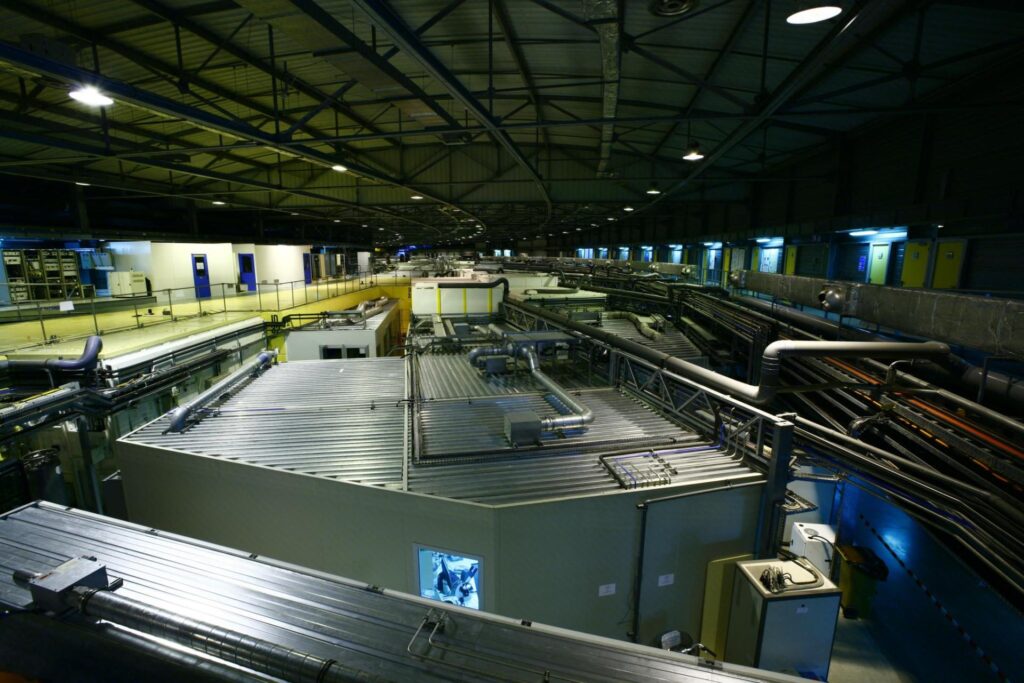
Synchrotron Radiation Experiments – ESRF (European Synchrotron Radiation Facility, Francia)
The European Synchrotron Radiation Facility (ESRF) in Grenoble, France, is one of the world’s most powerful synchrotron light sources, generating intense X-ray beams for probing materials at the atomic scale. Many beamlines rely on precise magnet control to shape and stabilize these beams, often employing CAEN NGPS power supplies.
CAEN NGPS Key Technical Features:
- 4-Quadrant Operation – Delivers and absorbs current to control magnets with high precision.
- High Output Current – Models available up to ±400 A for demanding applications.
- Sub-ppm Stability & Low Ripple – Ensures minimal noise and highly accurate beam steering.
- Digital Control & Real-Time Monitoring – Facilitates smooth integration with beamline control systems.
This combination of high-brilliance X-ray sources and ultra-stable power solutions underpins cutting-edge experiments at the ESRF, advancing research in physics, materials science, biology, and more.
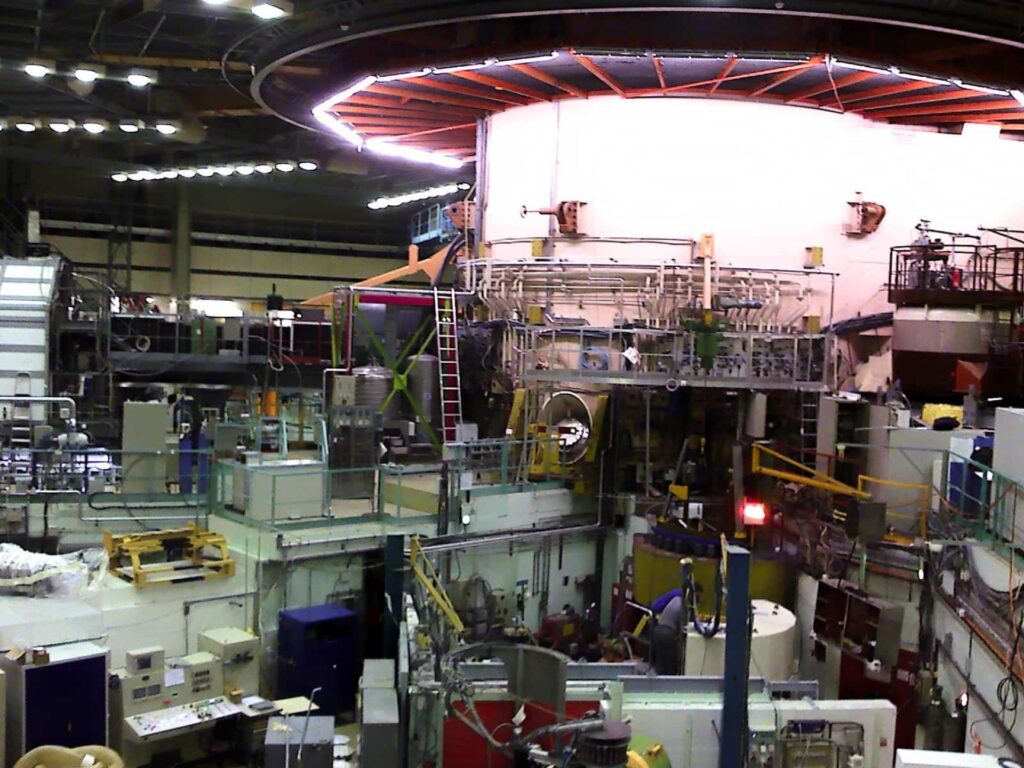
Neutron Scattering Experiments – ILL (Institut Laue-Langevin, Francia)
The Institut Laue-Langevin (ILL) in Grenoble, France, is a world-leading neutron research facility, renowned for its exceptionally bright neutron beams used in fundamental and applied research. By enabling detailed studies of materials at the atomic and molecular levels, ILL supports groundbreaking experiments in physics, chemistry, biology, and beyond. Many of these experiments rely on precise high-voltage control for detector systems, where CAEN SY4527 mainframes equipped with A7236 modules provide stable, low-ripple power. This synergy between cutting-edge neutron sources and robust power supply technology underpins high-resolution measurements, advancing scientific understanding and driving innovations in diverse fields.
Key Technical Features of SY4527 & A7236:
- High-Channel Density & Remote Management – The SY4527 mainframe accommodates multiple HV modules, offering network-based control and comprehensive monitoring.
- Stable, Low-Ripple High Voltage – A7236 modules deliver precise and consistent power to sensitive neutron detectors, enhancing data quality.
- Individual Channel Control & Protections – Facilitates independent optimization of each channel, ensuring safe and reliable operation.
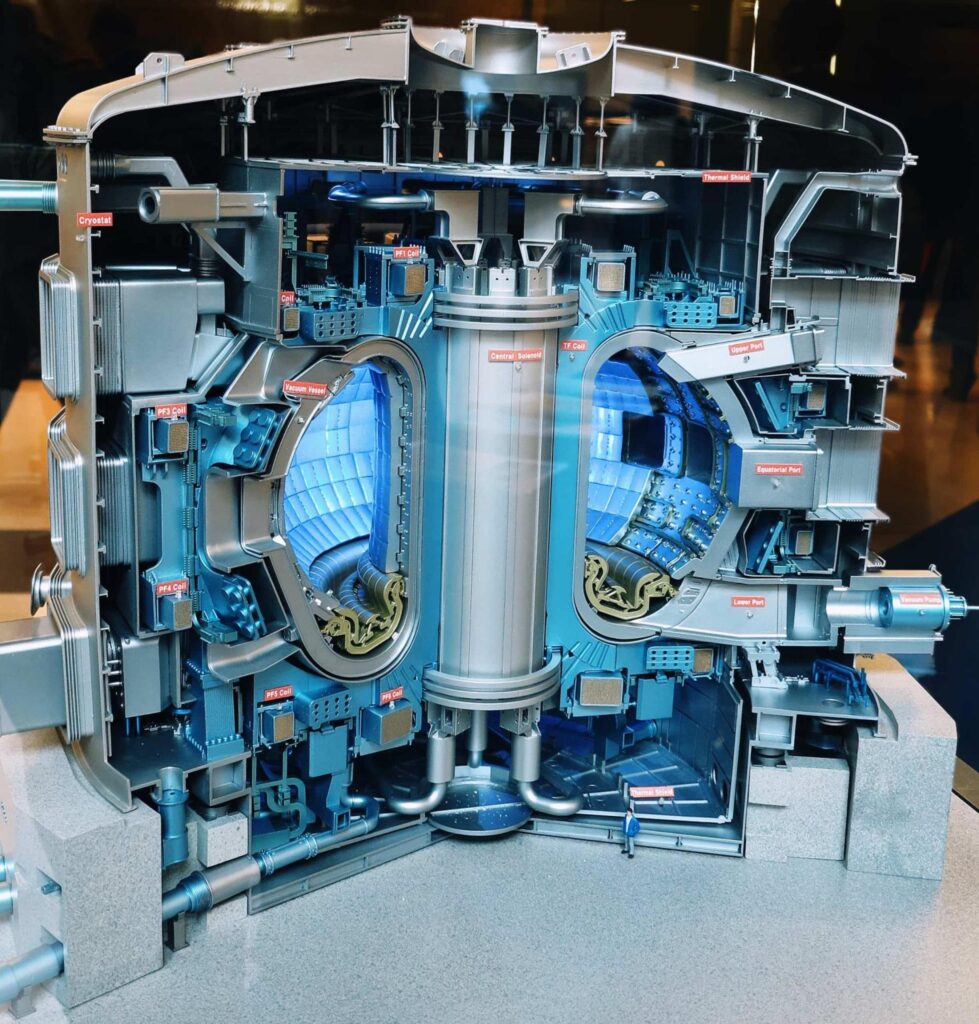
Plasma Material Interaction – ITER (Francia)
The International Thermonuclear Experimental Reactor (ITER) in France is a large-scale fusion experiment aimed at demonstrating the feasibility of fusion power and advancing the understanding of plasma-material interactions. By studying how high-temperature plasmas interact with reactor walls and components, researchers gain critical insights for designing future fusion power plants. These experiments require ultra-stable and rapidly adjustable power supplies to drive magnets, diagnostic tools, and test systems with high precision. CAENels FAST-PS 1k5 provides such reliability and performance, offering bipolar or unipolar outputs with fast switching and low noise. Its ability to deliver precise current or voltage control is essential for monitoring and controlling plasma conditions in real time.
Key Technical Features of FAST-PS 1k5:
- High Bandwidth & Fast Response – Ensures tight regulation during rapid plasma parameter changes.
- Low Noise & High Stability – Minimizes interference in sensitive plasma diagnostics.
- Scalable & Modular Design – Facilitates integration into large facilities like ITER, accommodating future expansions or upgrades.