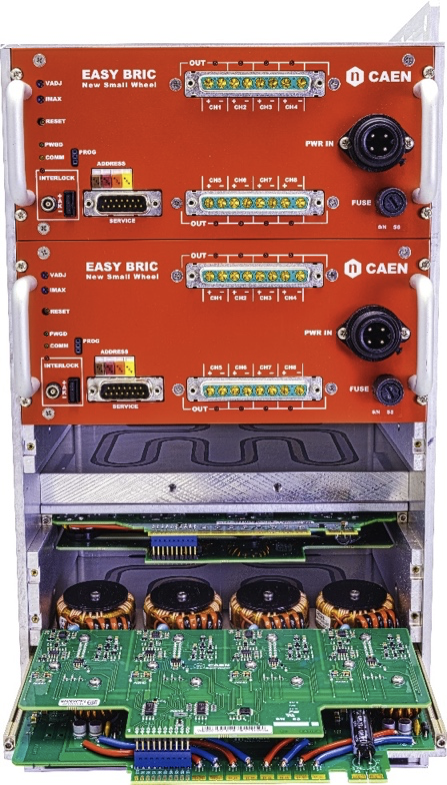


High Energy Physics
High Energy Physics is a field that explores the fundamental particles and forces that govern the universe. By recreating conditions similar to those just after the Big Bang, scientists aim to probe the properties and interactions of particles at incredibly small scales and high energies. Large particle accelerators, such as the Large Hadron Collider, enable the collision of particles at near-light speeds, allowing researchers to study phenomena like the Higgs boson, quark-gluon plasma, and potential evidence of dark matter. Experiments in high energy physics provide insights into the building blocks of matter and the fundamental laws of nature, advancing our understanding of the universe at its most fundamental level.
Examples of our products used
CAEN products are broadly used in high energy physics, supporting experiments that explore fundamental particles and their interactions at the smallest scales. From particle accelerators to large-scale detector arrays, CAEN’s high-precision power supplies and data acquisition systems ensure reliable performance in demanding environments.
CMS Experiment – CMS Si Tracker Power Supply System
The CMS Experiment at the Large Hadron Collider (LHC) relies on a custom power supply system designed to support its Silicon Tracker, which captures detailed particle trajectories near the collision point. This tracker includes both strip and pixel detectors, each contributing to high-resolution particle interaction reconstruction. To meet the specific power requirements of the Silicon Tracker, CAEN developed the EASY4000 power supply system.
The EASY4000 system comprises:
- 170 EASY4000 crates
- 1,070 A4601 LV/HV modules – These modules, with HV/LV “macrochannels,” provide floating output voltages for the strip detector modules and their front-end electronics, ensuring consistent and stable power delivery.
- 140 A4602 LV modules – These low-voltage modules power auxiliary electronics within the Silicon Tracker, ensuring comprehensive coverage across the tracking system.
- 70 A4603 LV/HV modules – Specifically designed for the pixel detector, these modules provide precise power tailored to the pixel layer’s demands. During the LHC’s long shutdowns (LS1 and LS2), CAEN upgraded these to the A4603D version to meet the increased current and voltage requirements of the new CMS Silicon Pixel detector, adding a customized patch to all seventy modules.
All low-voltage channels in the EASY4000 system are equipped with remote sensing lines, allowing for accurate voltage control directly at the load. This feature is critical for ensuring power stability over extended distances and supports the efficient, reliable operation of the CMS Silicon Tracker, contributing to the experiment’s data acquisition and tracking precision.
CMS Experiment – Drift Tubes (DT) muon chambers HV Power Supply System
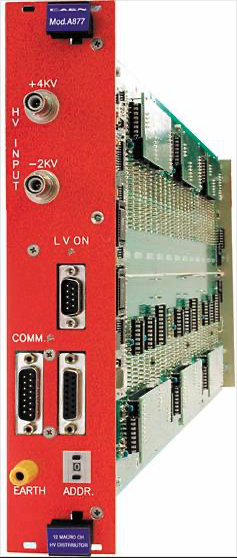
The CMS Experiment at the Large Hadron Collider (LHC) includes Drift Tubes (DT) muon chambers that detect muons and track their paths through the detector. Designed for long-term operation, these DT muon chambers require robust and maintainable power supplies to remain effective throughout the High-Luminosity LHC (HL-LHC) era, extending until 2040. To address this need, CERN awarded CAEN a contract to develop an updated HV power supply board, the A878, to replace the previous A877 model (190 units). This new board is engineered to operate reliably in the high-radiation environment of the CMS experimental cavern.
Each power system design consists of one A876 master board housed in the SY1527 mainframe, controlling up to four A877 remote boards placed near the detector. Each A877 remote board provides 12 groups of floating HV outputs, supplying power for the essential components of the DT muon chambers: two anodes (+4 kV), one strip (+2 kV), and one cathode (–2 kV). This configuration ensures stable and efficient power delivery across the complex structure of the muon chambers.
CAEN’s innovative approach in developing these remote boards incorporates advanced technical solutions to enhance their tolerance to magnetic fields and radiation, crucial for sustaining functionality in the challenging environment of the CMS cavern. This system upgrade will help keep the DT muon chambers fully operational and maintainable through the HL-LHC era.
CMS and ALICE Experiments – GEM muon chambers HV Power Supply System
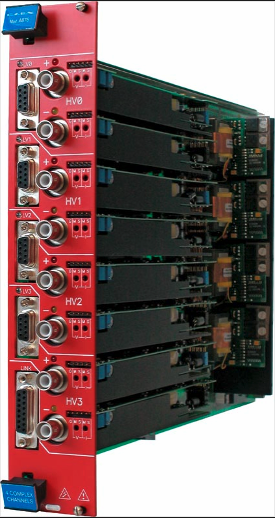
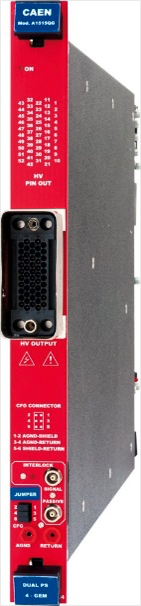
The CMS and ALICE experiments at the Large Hadron Collider (LHC) employ Gas Electron Multiplier (GEM) muon chambers for precision muon detection. During the LHC’s second long shutdown (LS2), CAEN designed and manufactured a dedicated high-voltage (HV) power supply system tailored to the requirements of GEM detectors. These detectors require precise voltage control across multiple layers, each layer sequentially stepping up in voltage (typically by ~100 V) from the ground layer (0 V) to reach several thousand volts, ensuring consistent operation and stability.
To meet these specific needs, CAEN developed the A1515 HV module, designed to power GEM chambers with careful attention to powering sequences and safety. Each of the 93 A1515 module channel is fully floating and can handle up to 1 kV, with multiple channels stackable to reach voltages as high as 5 kV with currents up to 1 mA. The precise control of power-up and power-down sequences, enabled by the A1515, is critical for maintaining safe and reliable GEM chamber performance.
This configuration allows CMS and ALICE to maintain stable and finely controlled power for their GEM muon chambers, ensuring operational reliability and alignment with the unique demands of GEM detector technology.
ALICE Experiment – Microstrip Detector Power Supply System
The ALICE Experiment at the Large Hadron Collider (LHC) is supported by a specialized power supply system designed for its Microstrip Detector, which requires both high-voltage (HV) and low-voltage (LV) supplies. CAEN developed this system specifically to meet the needs of the ALICE Microstrip Detector, ensuring that each component is magnetic and radiation tolerant to withstand the LHC’s challenging environment.
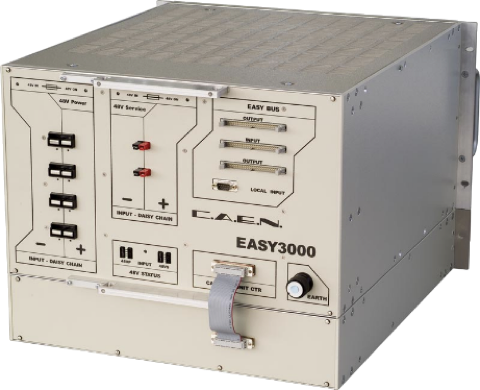
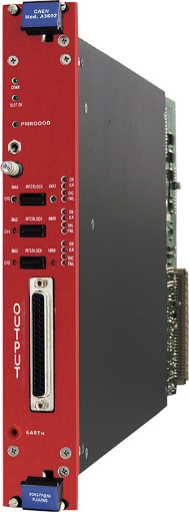
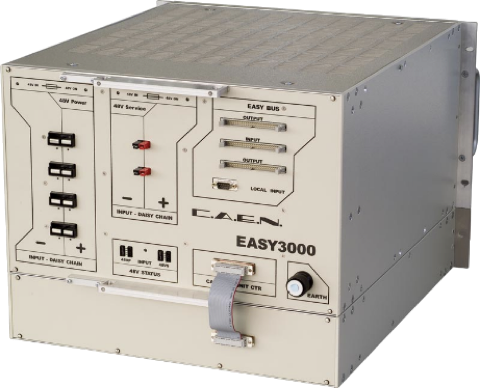
The power system includes the A3501 HV Module, a 12-channel high-voltage module that provides reliable HV for the detector, and the A3602 LV Module, a 3-channel low-voltage module to supply stable power for the detector’s electronics. Both modules are housed within the EASY3000 crate (18 units), a crate system designed to be robust in the presence of radiation and magnetic fields.
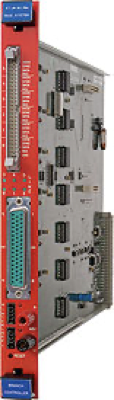
Remote control of the system is facilitated through the SY1527LC crate and A1676A interface boards (4 units), enabling precise and centralized control over all power channels. Additionally, A3486P power supply modules provide the necessary 48V DC to power the system, ensuring a stable supply to all modules.
This configuration offers consistent power distribution for the ALICE Microstrip Detector, covering the essential high- and low-voltage needs. The system’s remote control capabilities allow for efficient monitoring and management, ensuring the detector functions reliably within the high-radiation, high-magnetic field conditions of the LHC environment.
ALICE Experiment – TOF readout system
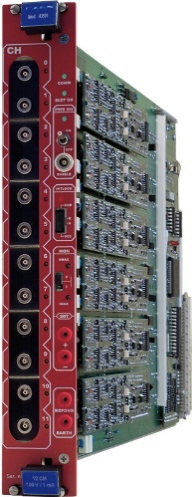
The ALICE Experiment at CERN’s LHC includes an advanced Time-Of-Flight (TOF) readout system, essential for high-precision particle identification. To support this system, CAEN provided ALICE with 710 custom Time-to-Digital Converter (TDC) boards, the VX1390 “TRM” (TDC Read-out Module), which are housed in 77 specially designed VME64X crates. Operating in the presence of strong magnetic fields and moderate radiation, the TOF system relies on these TRM boards to capture accurate timing data.
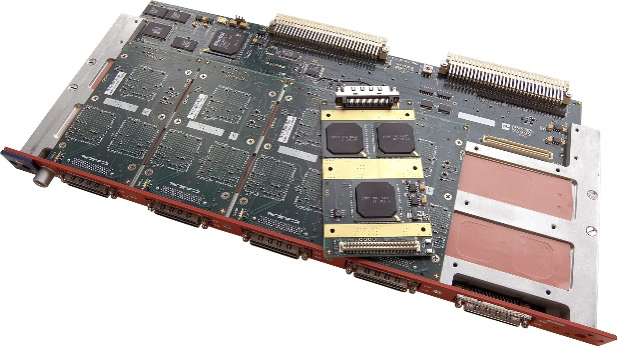
The VX1390 TRM board, derived from CAEN’s V1290A VME board, includes 240 TDC channels with 25 ps resolution and features 30 TDC chips developed by CERN’s ECP-MIC Division (HPTDC). To ensure reliability in the radioactive environment, CAEN carefully selected radiation-tolerant components and implemented safeguards against Single Event Latch-up and Single Event Upset.
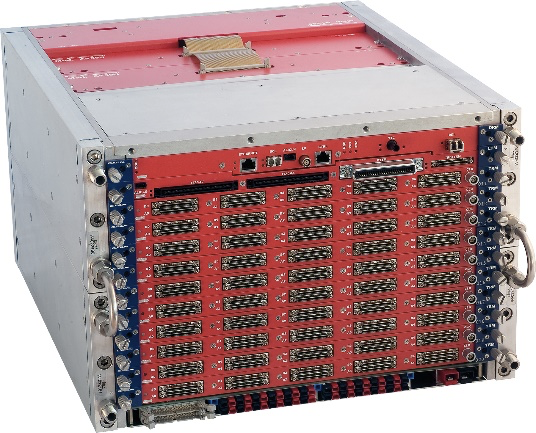
Beyond the TRM boards, CAEN developed additional components for the TOF readout system, including the VX1391 Data Readout Module, the VX1392 Local Trigger Module, and the VX1393 Clock Distribution Module. These modules, along with the power supply, are installed in the custom SY2390 “Alice-TOF-box” crate. The crate’s power supply configuration includes A1395 modules (1 channel, 3.3V/100A) and A1396 modules (11 channels, 2.7V/7A and 1 channel, 5V/2A), delivering stable power to the TRMs and TOF front-end electronics, even in magnetic fields up to 5 kGauss. To ensure stable thermal conditions, CAEN also designed a water-cooling system for the crate.
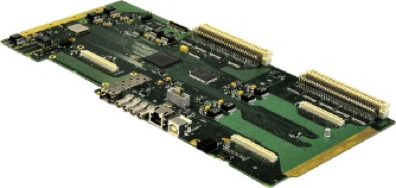
For an upgrade to the ALICE TOF electronics, CAEN introduced the VX1394 (DRM2) readout board, capable of reading data from the TDC Readout Module boards through VME. This new board integrates a Microsemi Igloo2 FPGA, acting as the VME master, which interfaces with the GBTx link to manage data transmission, triggers, and low-jitter clocking. The VX1394, compared to its predecessor, handles faster trigger rates and provides increased data bandwidth to the Data Acquisition (DAQ) system, enhancing the TOF system’s performance in high-data-rate environments.
ATLAS Experiment – Thin Gap Chamber Muon HV Power Supply System
The ATLAS Experiment at CERN’s Large Hadron Collider (LHC) uses Thin Gap Chambers (TGCs) as part of its muon detection system, which plays an essential role in identifying and tracking muons with high precision. To meet the specific power requirements of the TGC muon chambers, CAEN designed and manufactured a dedicated high-voltage power supply system.
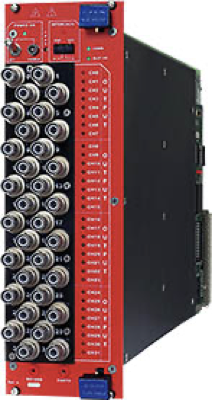
This system consists of 28 EASY 3000 crates, each equipped with multiple Model A3535 boards. These boards are 32-channel modules, delivering up to 3.2 kV at 0.5 mA per channel with a power output of 1.1 W. The A3535 modules are designed to provide reliable, stable power across all channels to ensure accurate operation of the TGC muon chambers within the high-radiation and high-magnetic-field environment of the LHC.
The entire power supply system is managed by a single SY1527 mainframe that houses several Model A1676A Branch Controllers. These controllers enable remote operation and monitoring of each EASY 3000 crate, providing centralized control over all connected HV channels. This setup allows ATLAS to achieve the stability and precision required for muon detection, while the modular and remotely manageable design ensures efficient and reliable operation over extended periods in the LHC’s demanding conditions.
ATLAS Experiment – ATLAS New Small Wheel (NSW) LV Power Supply System
The ATLAS Experiment at CERN’s LHC relies on the New Small Wheel (NSW) upgrade for enhanced muon tracking and detection capabilities. To power this cutting-edge subsystem, CAEN developed a low-voltage power supply system tailored for the challenging conditions of the High-Luminosity LHC (HL-LHC) environment. This power solution is the result of over a year of dedicated R&D, designed to handle significant radiation exposure while providing high power density in a compact setup.
The NSW power system includes 38 EASY6000NSW liquid-cooled crates, each containing Model A6001 boards. Each A6001 board has 16 channels, delivering 12 V at 16 A, with a power capacity of 200 W per channel. This configuration ensures robust and stable power for the NSW detectors, which require precise voltage control to maintain the accuracy of muon measurements.
These EASY6000NSW crates are remotely managed through SY4527 mainframes that host A1660 Branch Controllers, enabling centralized control and monitoring of all connected components. The system was specifically designed to withstand radiation levels exceeding 200 Gy in total dose, making it the most radiation-tolerant and power-dense CAEN EASY system developed to date. This innovative solution supports the NSW’s critical role in the ATLAS experiment by maintaining reliable power under extreme HL-LHC conditions, ensuring consistent performance and longevity.